Dresden griffon vultures released into the wild in northern Italy
Animal news | 12 December 2025
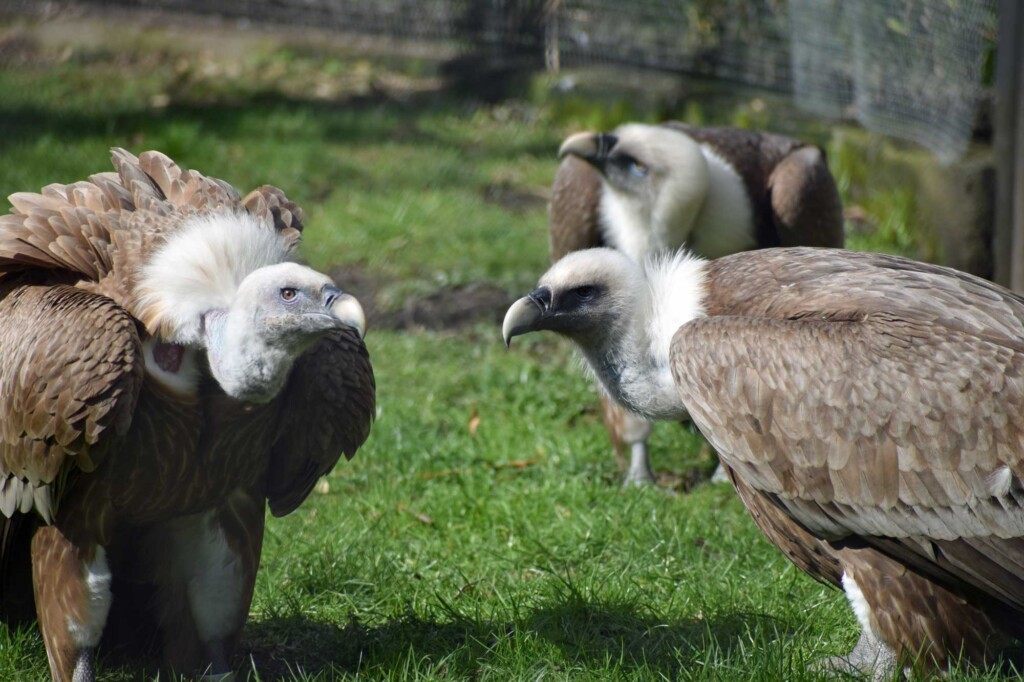
At the end of November, our two griffon vulture offspring travelled to a reintroduction project in Udine in northern Italy on the border with Slovenia. The two male birds hatched at our zoo in March 2024 and March 2025 and grew into handsome vultures. They arrived safely at the Lago di Cornino nature reserve (Riserva Naturale Regionale del Lago di Cornino).
 The two young griffon vultures will now stay at the centre for a few weeks to acclimatise while they are carefully prepared for their imminent release into the wild.
Like many vultures and birds of prey, the griffon vulture has experienced a sharp decline in recent decades and has disappeared from some countries. In Italy, the species was widespread in Sicily, Sardinia and various areas of the Alps and Apennines.
The total population in Italy (Sardinia, Friuli, Abruzzo, Sicily, Calabria) currently amounts to around 350 breeding pairs. The presence of the griffon vulture in Italy today owes much to conservation projects that have enabled the establishment of new colonies and the rescue of the last Italian colony in Sardinia. In November 2020, two offspring of the griffon vultures that hatched at Dresden Zoo were given to an outdoor project in Sardinia, where they are helping to strengthen and expand the population.
The Lago di Cornino nature reserve
Griffon vultures are usually found in the Eastern Alps in spring and summer, as they spend the warmer months of the year in a vast area that includes the Friuli-Venezia Giulia region and part of the Slovenian and Austrian Alps.

At the end of the 1980s, a conservation project was launched in the Riserva Naturale Regionale del Lago di Cornino to consolidate the species’ population in the Alps and create new breeding colonies. Around 80 vultures have been released into the wild since 1992. The local population currently comprises at least 200 individuals in winter and more than 350 in summer, when many birds arrive from Croatia and other countries. The birds follow traditional flight paths to migrate between Croatia and the most important locations in the Alps.
There is a feeding site in the nature reserve that provides large quantities of food all year round. However, the existence of this feeding site does not seem to have had an impact on the areas explored by griffon vultures, as they find much of their food in the Alps, where they feed on dead domesticated livestock and the carcasses of wild hoofed animals. The project has successfully ensured the return of griffon vultures to the Alps.
Our commitment to species conservation for native European vulture species
Dresden Zoo has supported the Vulture Conservation Foundation (VCF) financially since 2014. Since the introduction of the Conservation Euro, 35,000 euros have been channelled annually into the protection of all four vulture species native to Europe. Monitoring programmes record population numbers in the wild and study individual birds’ migration routes.
Dresden Zoo has played an active role in the reintroduction of bearded and griffon vultures into the wild.